
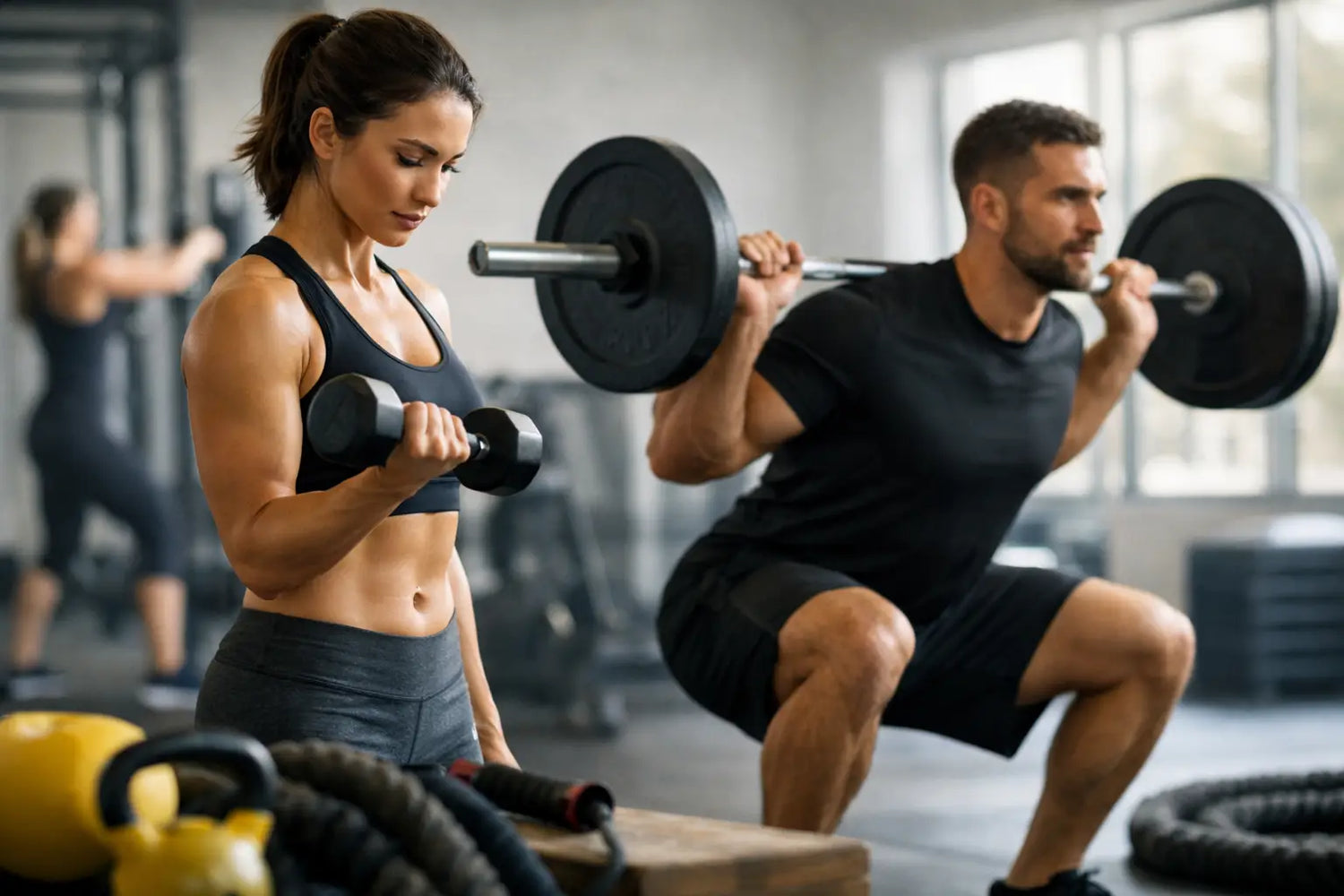
You feel it the second a movement gets harder on purpose. Your legs burn on a squat. Your shoulders light up when your hands stay high. Your core fights to keep you balanced while you punch, move, and reset. If you’ve asked what are the resistance training exercise options that actually improve performance, the answer starts here: they’re movements that force your muscles to work against load.
That load can come from dumbbells, barbells, cables, machines, body weight, or bands. The goal is simple - challenge the muscle enough to create adaptation. Done right, resistance training builds strength, power, stability, posture, and endurance. For fighters and serious athletes, it also sharpens movement quality under fatigue, which matters just as much as raw force.
What Are the Resistance Training Exercise Basics?
A resistance training exercise is any exercise where your muscles push, pull, press, brace, or drive against opposing force. That force creates tension. Tension is what tells the body to get stronger.
This is bigger than classic weight room work. A push-up is resistance training because you’re moving your body against gravity. A split squat with dumbbells is resistance training because the added weight increases demand. A resisted punch with band tension is resistance training because the resistance challenges the exact movement pattern.
That last point matters. Not all resistance is equal for every athlete. A bodybuilder may chase muscle size with slower, isolated lifts. A boxer needs strength that carries over to stance, rotation, hand position, conditioning, and repeat effort. Same category, different purpose.
The Main Types of Resistance Training Exercises
Most resistance work falls into a few buckets. Understanding them helps you train with intent instead of just collecting random workouts.
Bodyweight resistance exercises
These use your own body as the load. Push-ups, pull-ups, squats, lunges, dips, planks, and mountain climbers all count. They’re accessible and brutally effective when programmed well.
For beginners, bodyweight work teaches control and positions. For advanced athletes, it builds endurance, joint integrity, and movement discipline. The trade-off is that some bodyweight exercises become too easy over time unless you change tempo, leverage, range of motion, or total volume.
Free weight resistance exercises
This group includes dumbbells, barbells, kettlebells, and medicine balls. Think deadlifts, bench presses, rows, overhead presses, goblet squats, and loaded carries.
Free weights are valuable because they demand coordination, balance, and force production. They also let you progressively add load with precision. The downside is that they require good technique, especially on heavier compound lifts. More weight is not always better if the movement breaks down.
Machine-based resistance exercises
Machines guide the path of movement and make it easier to isolate muscles. Leg press, chest press, lat pulldown, hamstring curl, and cable row fit here.
Machines can help beginners train safely or let athletes overload specific areas without worrying as much about balance. But if your sport demands integrated full-body movement, machine work should support training, not replace it. It builds parts. Sport builds systems.
Resistance band exercises
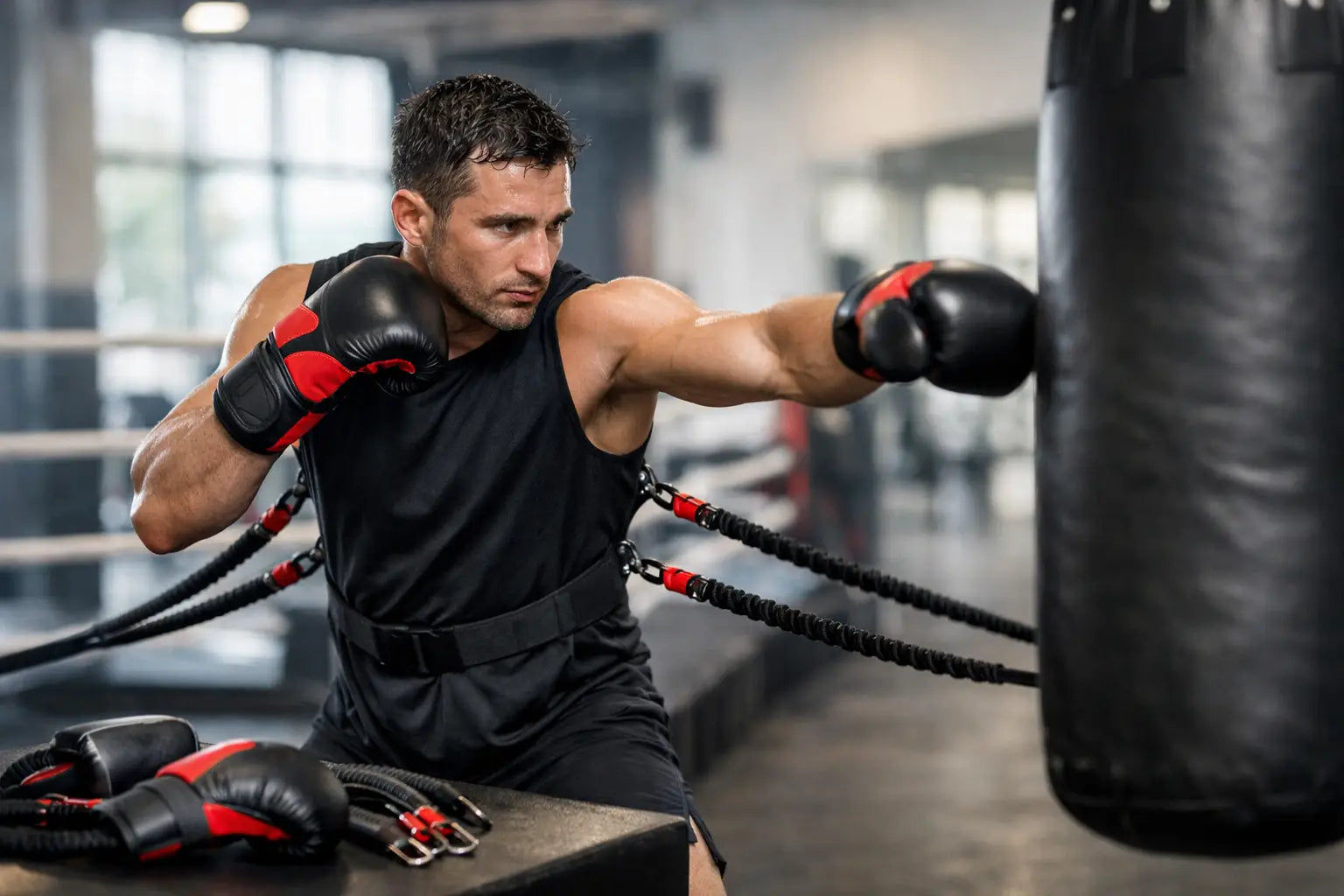
Bands create tension through elastic resistance. That sounds simple, but bands are one of the most versatile tools in performance training. You can use them for presses, rows, squats, lateral steps, anti-rotation work, sprint drills, and striking patterns.
Bands are especially useful because they challenge acceleration and control. In boxing and athletic movement, that matters. Resistance can reinforce posture, make the core work harder, and demand cleaner mechanics through the full range of motion. When the setup matches the sport, bands stop being a warm-up tool and become real performance equipment.
What Are the Resistance Training Exercise Patterns That Matter Most?
If you want results that carry over to sport and daily performance, stop thinking only in terms of muscle groups. Think in movement patterns.
The squat pattern trains your ability to lower and drive. The hinge pattern builds the posterior chain through movements like deadlifts and hip hinges. Pushing covers horizontal and vertical actions like push-ups and overhead presses. Pulling includes rows and pull-ups. Rotation and anti-rotation train the core to create or resist force. Carries and locomotion patterns build total-body stability under movement.
For fighters, these patterns show up everywhere. You squat into position. You hinge when loading power. You push and rotate when striking. You resist rotation when absorbing force and recovering stance. Good resistance training respects those patterns instead of chasing a pump and calling it preparation.
Why Resistance Training Matters for Fighters and Athletes
Strength is the obvious benefit, but it’s not the only one. Resistance training improves force output, yes, but it also improves how you control your body when tired, off-balance, or under pressure.
That’s where performance starts separating from gym numbers. A stronger upper back helps keep posture intact late in rounds. Better leg strength supports cleaner footwork and stronger base. A more conditioned core helps transfer power while protecting the spine. Shoulder endurance helps you keep your hands up when fatigue tries to drag them down.
This is why serious athletes don’t treat resistance work as optional. It builds the chassis. Skill still rules, but skill fades fast when the body can’t support it.
How to Choose the Right Resistance Training Exercises
The best exercise is not the fanciest one. It’s the one that matches your level, your goal, and your sport.
If your goal is general strength, compound movements like squats, rows, presses, and hinges should do most of the work. If your goal is muscle endurance, lighter loads and higher-rep sets can make sense. If your goal is athletic transfer, the exercise should train force in patterns that resemble how you actually move.
This is where context matters. A heavy bench press can build upper-body strength, but it doesn’t automatically improve punching mechanics. A resisted striking drill, on the other hand, may use less total load while doing more for sport-specific coordination, shoulder endurance, posture, and hand discipline. It depends on what you need most.
That doesn’t mean sport-specific resistance replaces traditional strength work. It means smart athletes know the difference between building capacity and applying it.
Common Resistance Training Mistakes
A lot of athletes train hard and still miss the mark because they make predictable mistakes.
The first is loading movement they haven’t earned. If your squat pattern is unstable, adding more weight just grooves bad mechanics. The second is training muscles in isolation while ignoring the way the body actually performs under speed and fatigue. The third is chasing exhaustion instead of adaptation. If every session turns into random high-intensity chaos, recovery drops and progress stalls.
Another mistake is treating resistance bands like a light accessory instead of a serious tool. Cheap setups and generic drills often create tension without direction. For combat athletes, resistance needs to match stance, guard, rotation, and footwork demands. That’s where specialized systems can change the game because they tie resistance directly to how you move, strike, and stay accountable to form.
What Are the Resistance Training Exercise Examples for Boxing?
For boxers and striking athletes, the strongest programs usually blend traditional and sport-specific work.
Lower-body strength can come from split squats, goblet squats, deadlifts, and lateral lunges. Upper-body support can come from rows, push-ups, presses, and pull-aparts. Core work should include anti-rotation holds, chops, rotational drives, and controlled trunk stability. Then you layer in resisted shadowboxing, resisted footwork, and conditioning drills that force you to produce technique under tension.
That combination matters. Heavy strength work can raise your ceiling. Sport-specific resistance helps you use that capacity in the ring, on the bag, or during movement training. Boxer Bands was built around that exact principle - resistance should train fighters like fighters, not like machines in a circuit.
How Often Should You Do Resistance Training?
For most athletes, two to four resistance sessions per week is enough to make real progress. The right number depends on your sport schedule, recovery, training age, and intensity.
If you’re boxing multiple days a week, you need resistance work that supports performance instead of draining it. That may mean two focused strength sessions plus shorter resisted movement sessions. If you’re in an off-season or building general athleticism, you may tolerate more volume.
The key is quality. A well-planned program with smart exercise selection beats a pile of random hard work every time.
Resistance training is not just about adding weight to a bar. It’s about teaching your body to produce force, control force, and hold form when the work gets ugly. Train with purpose, choose movements that match your demands, and make every rep carry over to something real.

Leave a comment
This site is protected by hCaptcha and the hCaptcha Privacy Policy and Terms of Service apply.