

Throw a hard three-punch combo in the first round, then try to snap that same speed in the sixth. That gap is where boxing specific strength training matters. Real fight strength is not about looking powerful under a barbell. It is about producing force fast, staying sharp under fatigue, keeping your hands up, and repeating clean mechanics when your lungs and shoulders start to burn.
A lot of fighters get this wrong because they chase general strength and assume it will automatically carry over. Some of it does. Stronger legs help. A stronger back helps. Better trunk control helps. But boxing is not a powerlifting meet, and it is not a bodybuilding split. The sport lives in rotation, posture, rhythm, foot pressure, punch recovery, and the ability to connect the ground to the fist without leaking energy.
That is why the best approach is not random lifting plus a few rounds on the bag. It is targeted resistance that respects boxing movement.
What boxing specific strength training actually means
Boxing specific strength training means building strength in patterns that show up in the ring. You are not just strengthening muscles in isolation. You are training the chain - feet, legs, hips, core, back, shoulders, and hands - to work together at boxing speed.
This matters because a punch is not an arm exercise. It starts from the floor, travels through the lower body, rotates through the trunk, stays organized through posture, and finishes through the shoulder and hand. If one link is late, weak, or out of position, power drops and mechanics break down.
Specificity also means respecting the demands of the sport. Boxers need force production, but they also need fast relaxation between strikes, quick directional changes, repeat-effort endurance, and enough positional strength to keep structure under pressure. If your strength work makes you slow, stiff, or too sore to box well, it is not specific enough.
Why generic strength work only gets you part of the way
Traditional strength training has value. Squats can improve force through the legs. Pulling work can build the upper back and help shoulder balance. Loaded carries can challenge trunk stability. None of that is useless.
The problem starts when general gym work becomes the whole plan. A heavy bench press might build pressing strength, but it does not teach you to punch with timing, rotate efficiently, or recover the hand back to guard. Machine-based work can add muscle, but it often removes the exact coordination boxing requires. Even explosive lifts can miss the mark if they do not match stance, rhythm, and punch mechanics.
There is also a trade-off. More load is not always better for a fighter. Chase maximal strength too aggressively and you may gain fatigue faster than usable transfer. Build too much muscle in the wrong places and your movement can feel tighter. Spend too much time on slow lifts and you may train your body to produce force in a way that does not match how you actually strike.
For fighters, the goal is not to win the weight room. The goal is to carry more speed, power, and stamina into live rounds.
The qualities that matter most in boxing specific strength training
The best boxing-specific work builds several qualities at once.
First is force from the ground up. Good punching starts with how you push, pivot, brace, and transfer weight. If your legs are weak or your feet are disconnected from your upper body, your punches look busy but feel light.
Second is rotational power with control. Boxing is violent rotation followed by immediate deceleration and return to position. You need to turn hard without losing balance, over-spinning, or falling out of stance.
Third is postural endurance. A lot of fighters can look sharp for one round. Then the chest lifts, the shoulders creep up, the chin floats, and the hands drop. Specific strength training should help you stay stacked and disciplined when fatigue hits.
Fourth is elastic repeatability. In boxing, one hard punch is not enough. You need to throw sharp combinations over and over. That means your strength work should support repeated efforts, not just one big output.
How to train strength without breaking boxing mechanics
The simplest rule is this: your strength training should reinforce the positions and movement patterns you want under pressure.
That means stance matters. Hand position matters. Trunk angle matters. Hip rotation matters. Punch recovery matters. If you train resistance while reinforcing bad habits, you are just making those habits stronger.
This is where resistance bands built for boxing have a real edge over generic tools. When resistance runs through the actual motion of shadow boxing, footwork, and punch return, the body has to organize itself the same way it does in real striking. You are not guessing about transfer. You are training it directly.
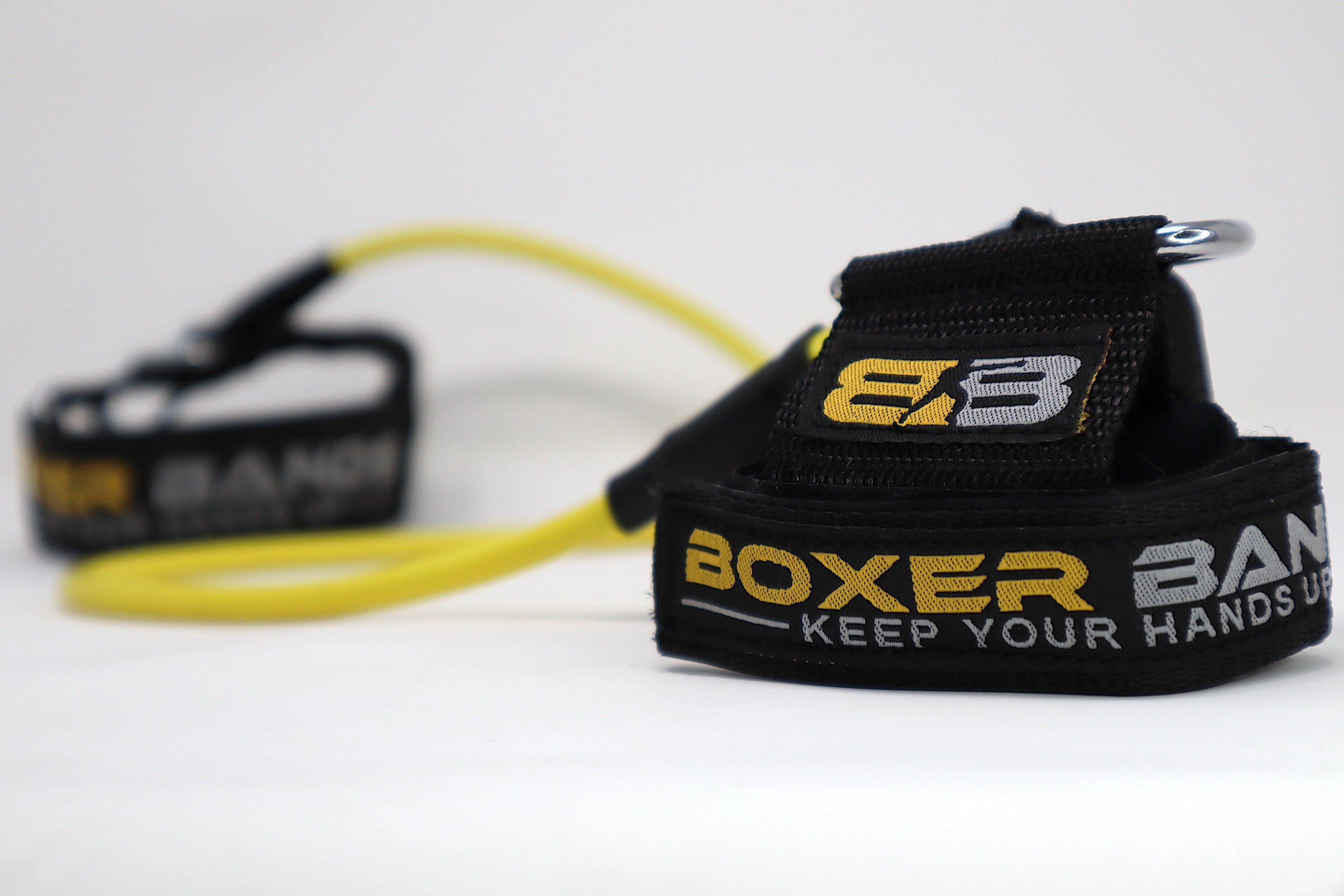
A system like Boxer Bands fits this approach because the resistance is tied into authentic boxing movement from hands to feet. That changes the training effect. Instead of isolating one area, you challenge the full chain while reinforcing posture, hand discipline, and movement mechanics. For serious athletes, that is the point. Train the pattern, not just the part.
Boxing specific strength training for power, speed, and stamina
Power, speed, and stamina are connected, but they are not the same thing. Your training should reflect that.
For power, resistance needs intent. Do not just move the bands or your body through space. Drive every punch with purpose, stay connected to the floor, and snap back to guard. Short explosive rounds work well here because quality matters more than volume.
For speed, the mistake is using so much resistance that every punch turns into a grind. Speed training should sharpen rhythm and reaction, not slow you into a fake version of power. Lighter resistance and crisp mechanics usually win.
For stamina, the goal is to maintain structure while fatigue builds. That means longer intervals, combination work, movement under tension, and strict attention to posture. If your shoulders burn and your hands still stay up, that is useful work. If everything falls apart by the middle of the round, the setup or dosage needs adjusting.
It depends on the athlete, too. A beginner may need more time building basic coordination and posture. An experienced boxer may need more advanced interval design and more precise control over resistance. A heavier puncher may benefit from more emphasis on punch recovery and elastic reloading. A high-volume fighter may need more repeat-effort conditioning under tension.
Where fighters usually waste time
A lot of athletes work hard but train around the sport instead of into it.
One common mistake is separating strength and skill too much. They lift in one world and box in another, hoping the pieces connect later. Sometimes they do, but not efficiently. Another mistake is overloading the shoulders with exercises that create fatigue without improving actual punch performance. Fighters also waste time on flashy movements that look athletic but do not clean up stance, posture, or striking rhythm.
The biggest waste is training with resistance that changes the movement so much it no longer looks like boxing. If the load forces ugly mechanics, wide punches, slow returns, or broken balance, the transfer drops fast.
Specific training should sharpen the sport, not distort it.
How to place boxing specific strength training in a real week
This does not need to replace your boxing. It needs to support it.
If you are in a heavy skill phase, keep the strength work short and sharp. Two or three focused sessions can be enough if the resistance is specific and the intent is high. On technical days, lighter resistance can groove mechanics and add conditioning without frying you. On harder days, short explosive rounds or movement-based resistance work can develop punch endurance and total-body output.
If you are further from competition, you may have more room for additional general strength work. That can help build a base. But even then, boxing specific strength training should stay in the plan so your strength keeps a direct line to the sport.
Recovery matters here. If your resistance work leaves you too flat to hit mitts, spar, or move well, something is off. More is not better. Better transfer is better.
What good transfer feels like
You usually know when training is carrying over.
Your feet feel more connected. Punches arrive with less effort and more snap. Your shoulders stay organized longer. Your hands return faster. Combinations feel tighter, not looser. You can pressure, angle, and punch without your posture melting late in the session.
That is the standard. Not gym numbers for their own sake. Not fatigue for the sake of fatigue. Real improvements you can feel in shadow boxing, bag work, mitt rounds, and conditioning.
If you want strength that shows up when the pace rises, build it where boxing happens - through your stance, your rotation, your recovery, and your discipline. Train with intensity, keep your hands up, and make every rep look like it belongs in the ring.


Leave a comment
This site is protected by hCaptcha and the hCaptcha Privacy Policy and Terms of Service apply.